 hiphopbogota hiphopbogota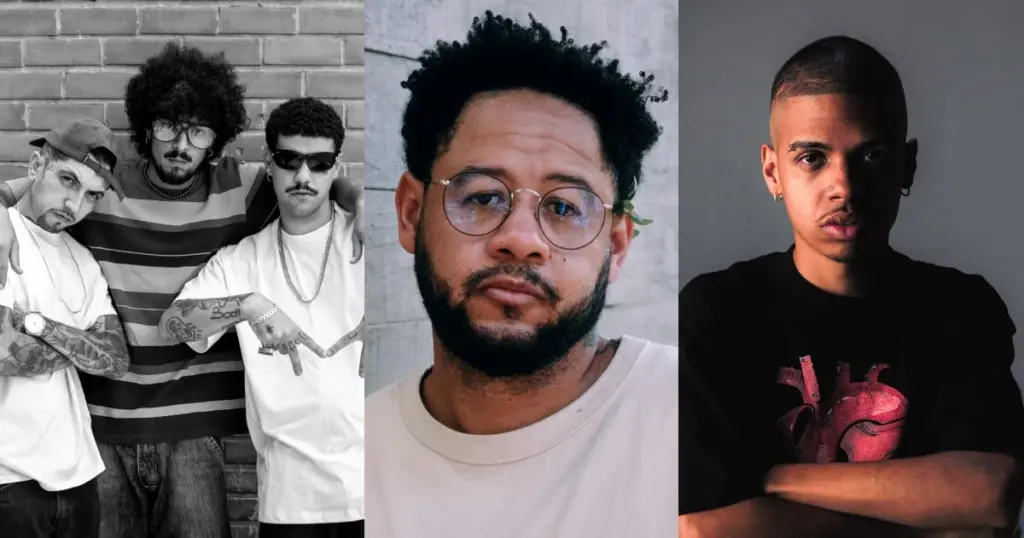
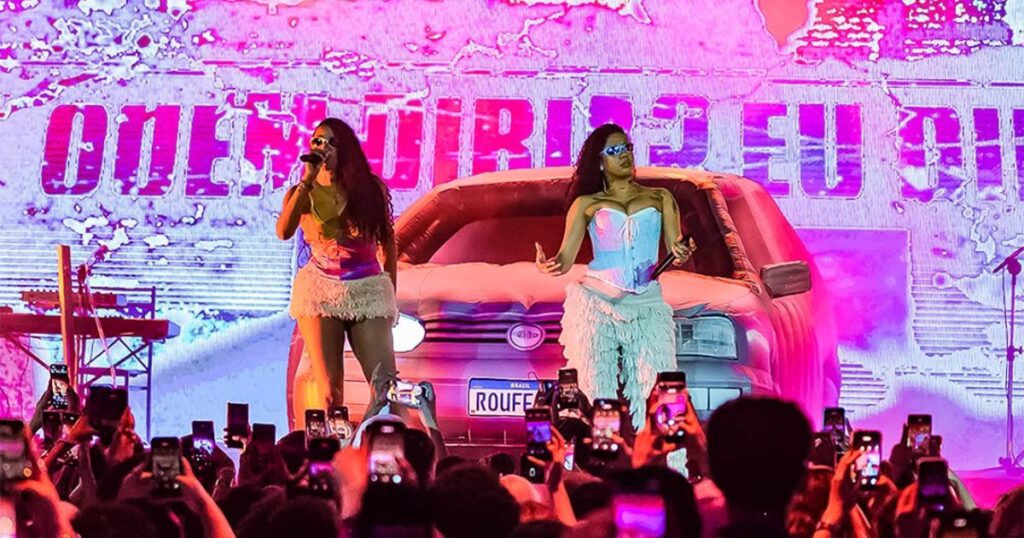
Brazilian rap heavyweight Emicida added two important names from a younger generation to his Coala Festival 2026 performance, announcing Jotapê and Puro Suco as special guests for his September 12 show at the Memorial da América Latina in São Paulo.
The appearance formed part of Emicida’s Emicida Racional MCMV tour, built around his project Emicida Racional VL 2 – Mesmas Cores & Mesmos Valores. The show revisits the influence of Racionais MC’s on his artistic formation while also connecting different generations of Brazilian rap.
That made Jotapê and Puro Suco especially fitting choices.
Rather than simply filling guest slots with established names, Emicida used the Coala stage to bring in artists who represent different sides of contemporary Brazilian hip-hop — freestyle culture, regional rap and independent production.
Jotapê Brings Battle-Rap Energy to the Stage
Jotapê built his reputation through freestyle and rhyme battles before expanding into recorded music and digital platforms.
His appearance with Emicida carries an obvious connection to the roots of Brazilian battle rap. Emicida himself came through freestyle culture before developing into one of the country’s most prominent rappers, so the pairing connects two generations shaped by similar foundations.
The two had already crossed paths again during the 10th-anniversary edition of Batalha da Aldeia, making the Coala Festival appearance another step in that relationship.
For Jotapê, performing at the Memorial da América Latina alongside Emicida represented a major career moment.
He described the opportunity as a celebration, emphasizing both the significance of the venue and the chance to perform again with an artist he considers a major influence.
That connection gives the performance more weight than a conventional guest appearance.
It reflects how Brazilian rap continues to renew itself through artists who came from battles, cyphers and local scenes before building wider audiences.
Puro Suco Represents the Federal District
The second guest, Puro Suco, brings a different regional identity to the show.
The group emerged from the outskirts of the Federal District and consists of MCs Murica and Peres alongside producer BEATDOMK. Their music blends rap with a strong independent approach and a sound rooted in the Brasília-area scene.
Their inclusion also fits Emicida’s current creative direction.
Later in September, Emicida would release the double single “RPB” and “Para Tio,” with “RPB” drawing inspiration from Puro Suco’s 2023 track “De Volta ao Básico.”
That later collaboration shows that the connection between Emicida and Puro Suco was not limited to one festival performance.
It reflects a wider exchange between an established figure and artists helping shape a newer generation of Brazilian rap.
A Return to Coala After Nine Years
The 2026 appearance was also important because it marked Emicida’s return to the Coala Festival stage for the first time since 2017.
Since his previous appearance, both Emicida and the festival have changed considerably.
Coala has expanded into one of São Paulo’s most prominent festivals centered on Brazilian and Portuguese-language music, regularly bringing together rap, MPB, samba, pop and experimental sounds.
The 2026 edition, held on September 12 and 13, was the festival’s 12th edition.
Emicida’s return therefore carried both personal and cultural significance.
He was no longer appearing simply as one of Brazilian rap’s rising names. By 2026, he had become one of the artists capable of linking multiple generations of the genre within the same show.
The Emicida Racional MCMV Tour Looks Back and Forward
The Coala set was built around Emicida Racional VL 2 – Mesmas Cores & Mesmos Valores, a project deeply connected to the influence of Racionais MC’s.
The tour does not function only as a tribute.
Instead, Emicida uses that influence as a starting point for reflecting on his own path through Brazilian hip-hop.
The show includes material from different phases of his career, beginning with his 2009 mixtape Pra Quem Já Mordeu um Cachorro por Comida, Até que Eu Cheguei Longe and moving through later work including AmarElo and his most recent material.
The musical direction is handled by Emicida himself, with Fejuca on production and Damien Seth as co-producer.
That career-spanning structure makes the guest choices especially meaningful.
Jotapê represents a battle-rap tradition that Emicida knows well.
Puro Suco represents a newer, regionally grounded independent scene.
And Emicida stands between those worlds, connecting his own history with the artists who are building what comes next.
Rap Shares the Stage With Multiple Generations of Brazilian Music
The September 12 Coala Festival lineup also showed how comfortably rap now sits inside a broader Brazilian musical landscape.
Emicida shared the day with Maria Bethânia, Marcos Valle with Ana Frango Elétrico, Cícero with Duda Beat, Zeca Veloso and Buraka Som Sistema.
The following day included Criolo, who celebrated 15 years of Nó na Orelha, alongside Duquesa, João Gomes, Seu Jorge, Luedji Luna with Fat Family, Sophia Chablau and Felipe Vaqueiro.
That mixture is part of what makes Coala significant.
Brazilian rap is no longer treated as a separate underground movement inside events like this. It appears alongside some of the country’s most respected names across multiple genres.
A Celebration of Brazilian Rap’s Continuity
Emicida’s decision to bring Jotapê and Puro Suco onto the Coala stage captured something important about the current moment in Brazilian hip-hop.
The genre’s history is increasingly being celebrated at the same time that younger artists are being brought into larger spaces.
Instead of treating generations as separate movements, the Coala performance connected them directly.
Emicida’s music reflects artists who influenced him.
Jotapê represents the freestyle culture that continues producing new voices.
Puro Suco brings the perspective of the Federal District and a younger independent movement.
Together, the three acts turned the September 12 performance into more than another festival appearance.
It became a small snapshot of how Brazilian rap keeps moving forward — by remembering where it came from while continuing to make room for what comes next.

 kofit36