 kofit36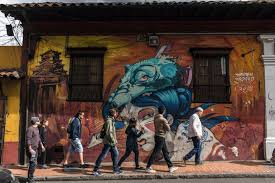
By Eli Jesse – HiphopBogota.com
In Colombia, hip-hop has always been political — not in a partisan sense, but as a language of truth. Born from marginalized neighborhoods and raised in resistance, the genre became the megaphone for those society tried to silence. Through beats and rhymes, rappers speak to power, confront oppression, and record the nation’s struggles in real time. In a country scarred by inequality, conflict, and corruption, hip-hop has become one of the purest political commentaries of the people, by the people.
The Roots of Rebellion
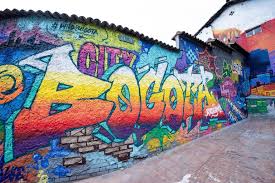
When hip-hop first arrived in Colombia in the 1980s and 1990s, it came with a message — one that resonated deeply in working-class neighborhoods: question authority, tell your truth, and fight injustice. Early Colombian rappers didn’t just mimic American hip-hop; they adapted it to their own social realities.
Groups like La Etnnia, Gotas de Rap, and Asilo 38 became pioneers of politically charged rap, tackling themes of violence, poverty, and state neglect. Their music became a mirror of Colombia’s fractured landscape — urban youth struggling to survive amid corruption and class divide.
La Etnnia’s classic album Criminales del Pensamiento is a testament to this era. Each track carried street-level journalism, speaking to systemic failure and social decay. It wasn’t just art; it was a call to awareness.
Protest in Poetry
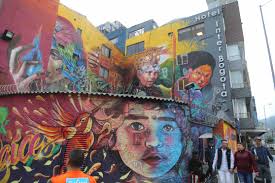
Fast-forward to the 2000s and beyond, Colombian rap continued to evolve alongside the nation’s political landscape. As peace talks, social movements, and protests swept the country, rappers became both chroniclers and catalysts of change.
When the 2021 national protests erupted — fueled by tax reforms, police violence, and economic inequality — rappers were on the frontlines. Artists like Ali A.K.A. Mind, Nanpa Básico, Diana Avella, and Mcfly released tracks that captured the pain and defiance of a generation. Their lyrics painted scenes the media ignored — tear gas, broken streets, and unwavering courage.
Songs like “Sin Miedo” and “Resiste” became protest anthems, echoing through marches, community gatherings, and social media feeds. These weren’t songs made for profit — they were cries for justice.
Speaking Truth to Power
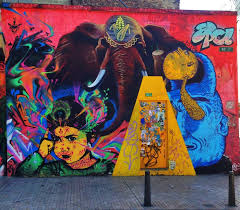
Colombian rappers are not afraid to name names. They call out politicians, institutions, and corporations that exploit or oppress. Hip-hop here is an unfiltered voice of accountability, where verses replace editorials.
MCs from cities like Bogotá and Medellín often rap about police brutality, government corruption, and broken promises of reform. Their lyrics humanize statistics — they tell the stories of families displaced by war, youth targeted by police, and workers fighting for dignity.
In neighborhoods like Soacha and Ciudad Bolívar, rappers have become community leaders, organizing peace concerts and workshops that blend activism with art. They understand that change isn’t just lyrical — it’s practical, built through solidarity and education.
From Underground to Policy Influence
What’s remarkable about Colombian hip-hop is how it’s slowly moved from underground stages into public discourse. Artists like Diana Avella, once battling prejudice as a woman MC, now hold positions in cultural policy and education, shaping how the government views urban art.
In Medellín, programs like Hip-Hop al Barrio and Casa Kolacho collaborate with local institutions to create dialogue between youth and authorities. Hip-hop, once criminalized, is now recognized as a force for civic engagement.
Through these bridges, artists influence policy indirectly — advocating for education, peace, and inclusion. Their verses are no longer just songs; they’re policy suggestions in rhyme form.
Historical Memory Through Music
Colombia’s decades-long conflict left deep wounds. Hip-hop became one of the few spaces where young people could process that pain. Many rappers come from families displaced by the war — their lyrics are personal archives of survival and memory.
Tracks often weave in historical events, from the assassinations of activists to the forced disappearances of civilians. In a country where history is often rewritten by the powerful, rap preserves the people’s version — raw, emotional, and real.
In cities like Cali and Cartagena, community collectives use hip-hop to teach history that textbooks omit. Kids learn about social leaders, indigenous resistance, and the cost of silence through the rhythm of a drum and the poetry of truth.
Hip-Hop as Political Healing
Hip-hop in Colombia isn’t only about protest—it’s also about healing. The same lyrics that rage against injustice also call for peace and unity. Artists like Ali A.K.A. Mind have built their careers on messages of love, self-awareness, and reconciliation. His music speaks of rebuilding the nation from within, starting with the heart.
Meanwhile, rap battles and festivals like Hip Hop al Parque serve as democratic spaces — platforms where anyone, regardless of background, can speak freely. In a country once silenced by fear, that freedom is revolutionary.
Global Solidarity and Awareness
Colombian hip-hop has also connected with international movements. Rappers collaborate with artists from Mexico, the U.S., and Africa, linking struggles against police brutality, racism, and inequality. These cross-cultural ties show that hip-hop is not just Colombian — it’s global resistance with local accents.
Through YouTube, Spotify, and TikTok, Colombian artists now reach audiences far beyond their neighborhoods. Their messages of protest and hope resonate with young listeners across Latin America, who see their own struggles reflected in the verses.
Conclusion
Hip-hop in Colombia stands at a powerful intersection of art and activism. It documents pain, sparks dialogue, and pushes for justice in a way no other medium can. Each lyric is a protest sign, each beat a heartbeat of a generation that refuses to be silenced.
The rappers of Colombia are more than musicians—they’re historians, educators, and revolutionaries with microphones. Their voices echo across barrios, reminding us that politics isn’t confined to congress halls—it’s alive in the rhythm of resistance.
And as long as injustice exists, Colombia’s rappers will keep writing the verses that speak louder than laws.

 hiphopbogota hiphopbogota