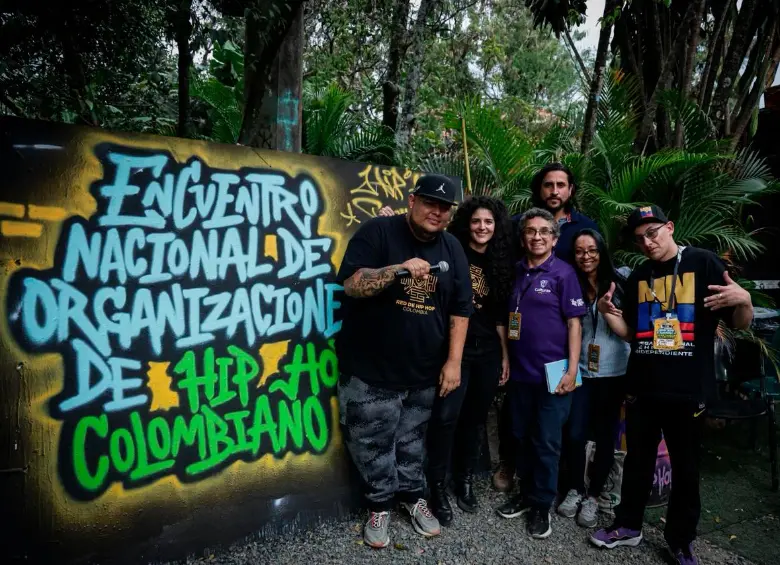
Colombia’s hip-hop community took an important step toward greater organization and representation this year when hip-hop organizations from across the country gathered in Medellín for the National Meeting of Hip-Hop Organizations.
The two-day meeting brought together representatives from 16 Colombian departments at Casa Kolacho in Comuna 13, one of the country’s most recognized spaces for using hip-hop and culture as tools for social transformation. The gathering brought together the Red Hip-Hop Colombia, the Mesa Nacional de Hip-Hop Independiente and Colombia’s Ministry of the Cultures, Arts and Knowledge.
Rather than focusing on performances or new music releases, the meeting addressed the infrastructure behind Colombia’s hip-hop movement and how the culture can become stronger and more sustainable across the country.
Building a National Hip-Hop Agenda
One of the central objectives was creating a technical and political roadmap for strengthening hip-hop in different Colombian territories.
Participants organized their discussions around four main areas: formation, sustainability, circulation and territory.
The approach was designed to give organizations from different parts of Colombia a direct opportunity to communicate their needs and challenges to national government representatives.
Representatives from departments including Atlántico, Bolívar, Boyacá, Caldas, Casanare, Cauca, Caquetá, Chocó, Cundinamarca, Nariño, Norte de Santander, Risaralda, Santander, Tolima and Valle del Cauca, alongside Bogotá, participated in the discussions.
Their presence demonstrated the geographical reach of Colombian hip-hop and the number of local organizations working to develop the culture outside the country’s biggest commercial music markets.
Hip-Hop Beyond the Music
The meeting highlighted something that is sometimes overlooked when Colombia’s music industry is discussed internationally: hip-hop is not simply a genre of recorded music.
Across Colombia, hip-hop organizations work through education, community projects, cultural events, dance, graffiti, DJing and social initiatives.
That broader role was particularly visible in the choice of Casa Kolacho as the meeting’s location.
Located in Comuna 13, Casa Kolacho has become a symbol of Medellín’s transformation through art and culture. The Ministry of Culture described the space as an example of how hip-hop can contribute to peace, memory and the creative economy.
The location therefore gave the national gathering a deeper meaning.
The organizations were not simply discussing the future of music. They were discussing the future of a culture that has become intertwined with communities throughout Colombia.
A Conversation Between the Scene and Government
Another important aspect of the meeting was the direct dialogue between hip-hop organizations and Colombia’s national government.
Minister of the Cultures, Arts and Knowledge Yannai Kadamani participated in the discussions alongside Vice Minister of the Arts Fabián Sánchez.
The government’s involvement created an opportunity for organizations to present their diagnoses, needs and proposals directly rather than relying exclusively on traditional cultural institutions.
The meeting also emphasized the importance of allowing the hip-hop community to organize its own platform and define concrete areas of action and investment.
For an independent culture that has often developed outside traditional institutions, that distinction matters.
The goal is not simply to bring hip-hop into existing structures, but to create policies that recognize the way the culture actually operates across Colombia.
Four Priorities for the Future
The discussions centered on four major priorities.
Formation focuses on education and developing new generations of artists and cultural workers.
Sustainability addresses the economic challenges faced by organizations and independent practitioners attempting to keep projects running.
Circulation focuses on creating more opportunities for artists and cultural projects to move between cities and regions.
Territory recognizes that Colombian hip-hop does not have a single center. Different cities and communities have developed their own scenes, histories and artistic identities.
Together, those four areas form a broader strategy for strengthening the country’s hip-hop ecosystem.
A Culture With a National Footprint
The participation of organizations from 16 departments also demonstrated how widespread Colombian hip-hop has become.
While Medellín and Bogotá remain highly visible centers of the culture, the movement extends into regions across the country.
That national footprint is increasingly important as Colombian artists gain international attention.
The global success of Colombian reggaeton and urbano music has helped put the country’s broader music industry in the spotlight. But beneath that international commercial success is a network of local hip-hop communities that have spent decades developing their own scenes.
The national meeting recognized that work and attempted to give those communities a stronger collective voice.
Looking Beyond the Mainstream
Colombia’s hip-hop story cannot be measured only through streaming numbers, chart positions or major concerts.
Some of the culture’s most important work happens through local organizations, youth programs, independent venues, dance crews, graffiti artists, DJs and community leaders.
The Medellín meeting placed that side of hip-hop at the center of the conversation.
The participating organizations ultimately presented their diagnoses, challenges and proposals to government representatives and closed the meeting with a symbolic signing of agreements.
The agreements also connected the movement to broader national cultural initiatives, including the Plan Nacional de Música para la Convivencia and Artes para la Paz.
Colombia’s Rap Community Looks Ahead
The National Meeting of Hip-Hop Organizations represents an important development because it shows Colombian hip-hop organizing beyond individual artists and events.
The culture is increasingly speaking collectively about issues such as education, funding, touring opportunities, regional development and long-term sustainability.
From the streets of Comuna 13 to hip-hop communities across the country, the movement is demonstrating that its future will depend not only on the artists who perform on stage but also on the organizations working behind the scenes.
For Colombian hip-hop, that could prove just as important as any single concert or album release.
The meeting in Medellín was ultimately a statement that Colombia’s hip-hop community wants a seat at the table—and intends to help shape the future of its own culture.
About the Author